Introductio
The world of digital marketing and search engine optimization (SEO) is evolving at a breakneck pace. Today, relying on manual processes for keyword research, backlink audits, and rank tracking will inevitably cause you to fall behind your competitors. To manage data efficiently at scale, the most powerful tool at your disposal is an SEO API.
Whether you are an agency owner, a software developer, or an enterprise marketer, integrating an SEO API can completely revolutionize your workflow. This comprehensive guide explores what an SEO API is, how it functions, its core benefits, and how you can leverage it to automate your digital marketing strategy.
1. Understanding the SEO API
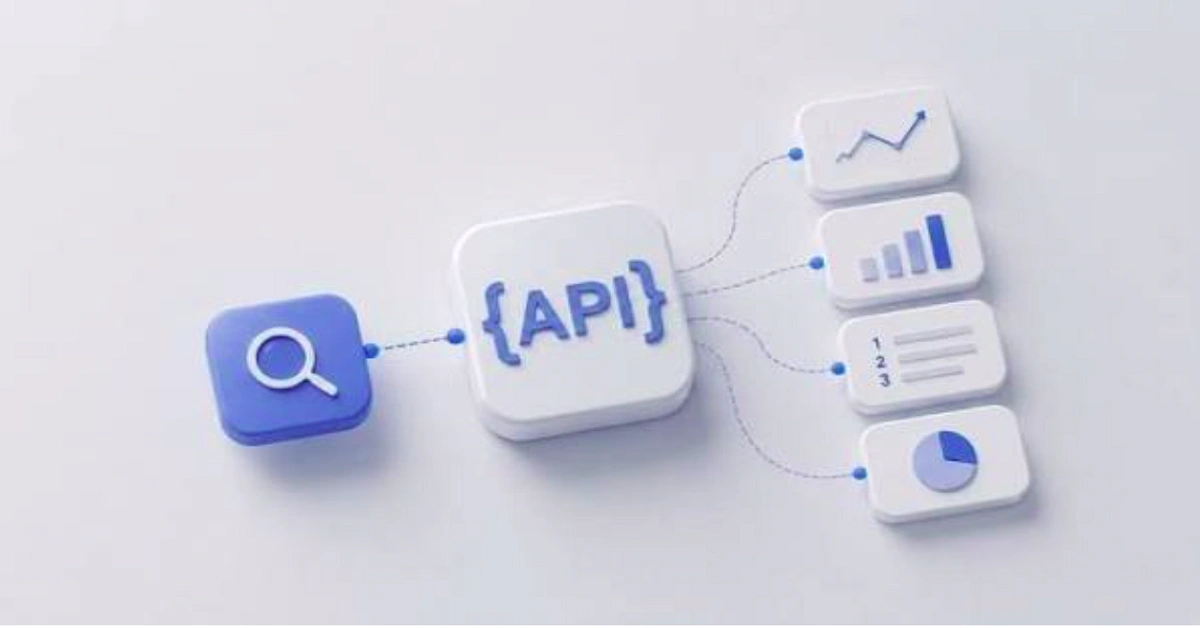
An API, or Application Programming Interface, acts as a software intermediary or bridge that allows two distinct applications to interact and share data seamlessly with one another.
When applied to search engine optimization, an SEO API is a programmatic interface that extracts raw data directly from search engines (like Ahrefs, Semrush, SE Ranking, or DataForSEO). It then feeds that structured data directly into your custom dashboards, internal databases, or client-facing software applications.
Instead of manually logging into a platform, clicking multiple tabs, and exporting a CSV file, your software sends an automated HTTP request. Within seconds, it retrieves highly accurate, structured data in JSON format.
2. Core Types of SEO APIs
Because search engine optimization is a multi-faceted discipline, the market offers several specialized types of SEO APIs based on specific operational needs:
A. SERP and Rank Tracking APIs
These APIs pull live data straight from search engine results pages (SERPs). They show exactly where a specific website ranks for targeted keywords. High-quality SERP APIs can isolate results based on geographical locations, device types (mobile vs. desktop), and local map packs.
B. Keyword Research APIs
If you need to analyze thousands of keywords simultaneously, a keyword research API is essential. It provides bulk metrics on search volume, keyword difficulty, cost-per-click (CPC), and related semantic search terms without requiring manual searching.
C. Backlink and Domain Authority APIs
Evaluating the link profile of a website is crucial to understanding its competitive strength.
D. Technical Audit and On-Page APIs
These APIs crawl websites programmatically to detect underlying technical performance issues. They instantly flag broken links, missing meta tags, slow page speeds, server response issues, and robots.txt misconfigurations.
3. Major Benefits of Implementing an SEO API
Utilizing an SEO API is not just about saving time; it is a fundamental business scaling strategy. Key advantages include:
-
End-to-End Automation: Routine, repetitive tasks—such as daily rank tracking or generating monthly client audits—can be completely offloaded to automated background scripts.
-
Large-Scale Data Handling: For massive e-commerce websites with hundreds of thousands of product pages, manual tracking is impossible. APIs allow you to analyze data across an entire domain simultaneously.
-
Real-Time Insights: Algorithms shift constantly. SEO APIs supply up-to-date, live data so you can react immediately to unexpected ranking fluctuations.
-
Custom Reporting Dashboards: You can direct your data pipelines into tools like Google Looker Studio, internal CRMs, or proprietary software to display custom visual reporting metrics for your team or clients.
-
Cost Efficiency: Instead of buying expensive individual user seats for large teams on multiple platforms, many APIs operate on a flexible, pay-as-you-go pricing model based purely on data consumption.
4. Top SEO API Providers on the Market
Selecting a reliable data vendor is critical. Some of the most robust and widely used options include:
-
DataForSEO: Known as an industry standard for raw data, offering affordable and highly reliable APIs covering SERPs, keywords, and technical on-page parameters.
-
SE Ranking API: A favorite among growing agencies, helping automate complex reporting workflows and tracking search visibility across traditional and AI-driven engines.
-
Google Search Console API: A direct, first-party tool from Google that delivers 100% accurate information regarding real impressions, organic clicks, and core web vitals.
-
SerpApi: A fast, specialized scraping API designed to parse structured data out of Google, Bing, Baidu, Yandex, and eBay SERPs without proxy management headaches.
5. The Future: Combining SEO APIs with Artificial Intelligence
Data collection is only half the battle; the true value lies in execution. When you connect an SEO API with Artificial Intelligence (AI) models like GPT-4 or Claude, you unlock powerful capabilities:
-
Automated Content Briefs: An API can scrape the top 10 ranking pages for a target term, pass that data to an AI, and generate a comprehensive, highly optimized article outline in minutes.
-
Bulk Content Optimization: E-commerce sites can use an API to fetch low-performing keywords and instruct an AI to rewrite thousands of product descriptions to target those terms naturally.
-
Intelligent Internal Linking: A crawler API can map out an entire site structure, allowing an AI model to analyze semantic relevance and safely suggest optimal internal anchoring strategies.
6. How to Get Started with an SEO API
If you are transitioning to an API-first approach, follow these basic steps:
-
Choose a Provider: Assess your primary requirements (SERPs, backlinks, or technical audits) and register with a matching API provider.
-
Generate Your API Key: Upon registration, you will receive a unique cryptographic API Key. Treat this like a password, as it authenticates your software requests.
-
Review the Documentation: Reliable providers feature extensive developer documentation demonstrating how to construct API requests using popular programming languages like Python or Node.js.
-
Utilize No-Code Integrations: If you do not have software development experience, tools like Make.com or Zapier let you seamlessly map an SEO API directly into Google Sheets without writing code.
Conclusion
An SEO API is no longer a luxury reserved only for massive software companies. It has become a foundational necessity for any digital marketing team looking to scale operations efficiently. By shifting away from tedious manual data fetching, you free your team to focus on what truly matters: creative positioning, high-level strategy, and bottom-line business growth.